The science canister from the Genesis spacecraft has been transported by helicopter from its impact site at the U.S. Army Dugway Proving Ground in Utah to a holding area next to a specially constructed clean room on the Army base.
The foil wrapping will be removed from the canister and dirt will be brushed off before the canister is moved into the clean room for analysis of the contents.
NASA's Jet Propulsion Laboratory, Pasadena, Calif., manages the Genesis mission for NASA's Science Mission Directorate, Washington. Lockheed Martin Space Systems, Denver, developed and operated the spacecraft. JPL is a division of the California Institute of Technology.
Canister Moved Into Cleanroom
The science canister from the Genesis mission was moved into the cleanroom at the U.S. Army Dugway Proving Ground in Utah early Wednesday evening.- First, a team of specialists plucked pieces of dirt and mud that had lodged in the canister after the mission's sample return capsule landed at high speed in the Utah desert. The Genesis team will begin examining the contents of the canister on Thursday morning.
NASA's Jet Propulsion Laboratory, Pasadena, Calif., manages the Genesis mission for NASA's Science Mission Directorate, Washington. Lockheed Martin Space Systems, Denver, developed and operated the spacecraft. JPL is a division of the California Institute of Technology.
Genesis Mission Status Report
The Genesis sample return capsule entered Earth's atmosphere at 9:52:47 a.m. Mountain Daylight Time and entered the preplanned entry ellipse in the Utah Test and Training Range as predicted. However, the Genesis capsule, as a result of its parachute not deploying, impacted the ground at a speed of 311 kilometers per hour (193 miles per hour). The impact occurred near Granite Peak on a remote portion of the range. No people or structures were anywhere near the area.
"We have the capsule," said Genesis project manager Don Sweetnam of NASA's Jet Propulsion Laboratory, Pasadena, Calif. "It is on the ground. We have previously written procedures and tools at our disposal for such an event. We are beginning capsule recovery operations at this time."
By the time the capsule entered Earth's atmosphere, the flight crews tasked to capture Genesis were already in the air. Once it was confirmed the capsule touched down out on the range, the flight crews were guided toward the site to initiate a previously developed contingency plan. They landed close to the capsule and, per the plan, began to document the capsule and the area.
"For the velocity of the impact, I thought there was surprisingly little damage," said Roy Haggard of Vertigo Inc., Lake Elsinore, Calif., who took part in the initial reconnaissance of the capsule. "I observed the capsule penetrated the soil about 50 percent of its diameter. The shell had been breached about three inches and I could see the science canister inside and that also appeared to have a small breach," he said.
The safety of recovery personnel has been the top priority. The capsule's separation charge had to be confirmed safe before the capsule could be moved. The recovery team is in the process of preparing to move the capsule to a clean room.
The Genesis mission was launched in August 2001 on a journey to capture samples from the storehouse of 99 percent of all the material in our solar system -- the Sun. The samples of solar wind particles, collected on ultra-pure wafers of gold, sapphire, silicon and diamond, were designed to be returned for analysis by Earth-bound scientists.
JPL manages the Genesis mission for NASA's Science Mission Directorate, Washington. Lockheed Martin Space Systems, Denver, developed and operated the spacecraft. JPL is a division of the California Institute of Technology.
For information about the Genesis Sample Return Mission on the Internet, visit http://www.nasa.gov/genesis
For background information about Genesis, visit http://genesismission.jpl.nasa.gov
Articoli Correlati


Ultimi Articoli

Meteo del weekend e ora solare: temperature in calo, il 25 ottobre lancette indietro

M6 Milano, il 24 ottobre si apre il confronto con i cittadini sulla futura metropolitana

Lombardia, 900.000 euro per bande, cori e gruppi folk: domande dal 20 novembre

Lombardia, 20 milioni per l’accesso al credito di imprese e lavoratori autonomi
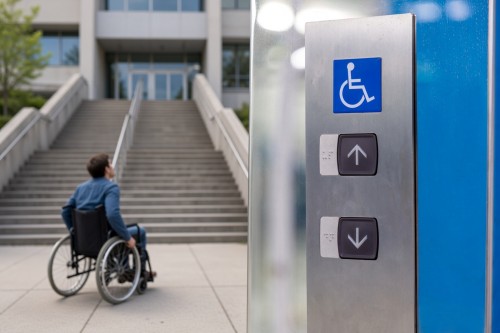
Lombardia, 1,1 milioni per eliminare le barriere architettoniche: previsti 263 interventi
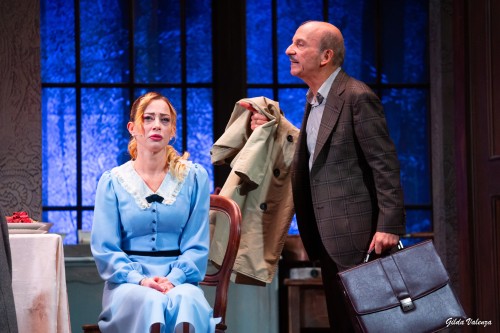
Carlo Buccirosso in scena con “Qualcosa è andato storto!”

Ilze Brands Kehris nominata rappresentante speciale dell’UE per i diritti umani

Milano, il progetto STEP per il lavoro di 250 giovani: presentazione il 20 ottobre

Cucina italiana ad Atene, la Lombardia partecipa con quindici consorzi